Home » Our Impact »
ACADI-supported research is focused on developing patient-centred innovations aimed at improving diagnosis, management and prevention of diabetes and its complications.
Our portfolio of supported projects includes new therapeutics, diagnostic tools, technologies, digital health solutions and behavioural interventions.
A number of these projects have advanced to clinical trial, commercialisation and implementation stage and have the capacity to provide real-world benefits for those living with diabetes.
Learn more about these research achievements from patients and clinical trial participants first-hand, as they share their stories.
Simon, clinical trial participant
Simon was 13 when he was first diagnosed with type 1 diabetes. Now 51, his story stretches across the evolution of diabetes care – from glass syringes and urine testing in his youth, to the transformative impact of modern medtech being assessed in national clinical trials conducted by ACADI.
“To go from that to now being on a fully closed loop insulin pump and continuous glucose monitoring is pretty life changing,” Simon says.
While observing diabetes treatment transform, he has repeatedly volunteered for clinical trials to be part of that change. “I might have done six trials in the last 20 years,” he reflects. Most recently he joined a 13‑week study testing a tablet typically used for type 2 diabetes – a trial design that let participants experience the drug and then compare life without it. He only realised later that the trial had been supported by ACADI.
Simon’s motivation is practical as much as altruistic. With a background in corporate commerce, corporate affairs and government relations, he understands systems and sees clinical trials as both a personal opportunity and a way to advance care for others.
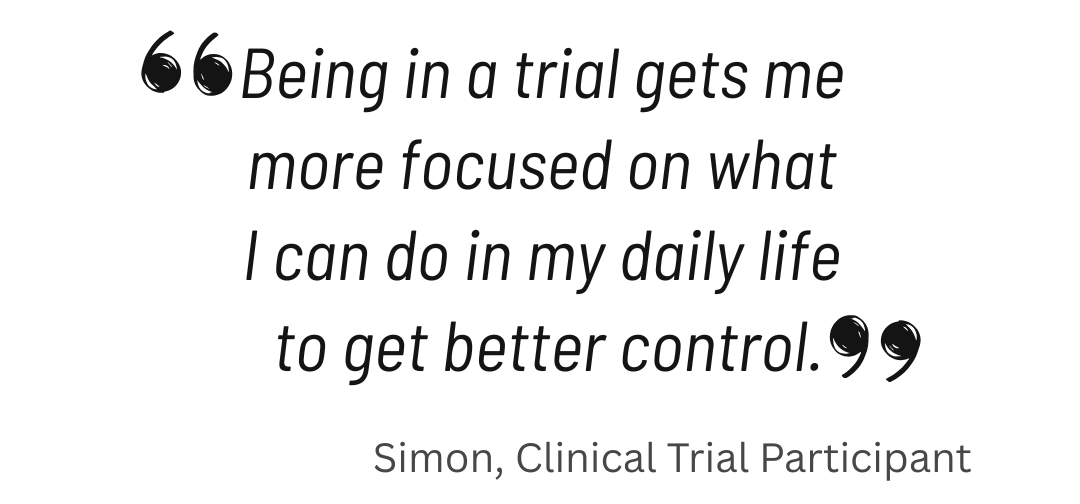
“Being in a trial gets me more focused on what I can do in my daily life to get better control. It’s a bit of a discipline,” he says. He values the comparative insight that clinical trials offer: experiencing the upside of new treatments and then seeing life without them.
The benefits have been tangible. Simon noticed improved control and even weight loss while on the tablet, and his specialist has the option to prescribe the medicine after the study – a rare, welcome outcome compared with earlier trials where participants sometimes leave with a placebo or no long‑term access.
Above all, Simon urges others to consider participating in clinical trials. “The health professionals will find a way to make it work for you,” he says. “It just helps take away that additional burden of having to manage it, minute to minute or hour to hour.”
For Simon, the aim is simple: to live well with diabetes and help make that possibility easier for everyone.


Susan, REMODel clinical trial participant
Rural and remote Queenslanders living with type 2 diabetes are embracing virtual tools to liaise with their clinicians – monitoring, reviewing and managing symptoms in real time, without leaving home.
A patient could be anywhere – in a remote setting or even somewhere overseas.
By monitoring her own blood glucose levels, enthusiastic traveller Susan has radically improved her diabetes management thanks to her involvement in a clinical trial of REMODel, a digital health platform. Her levels are uploaded live and sent directly to her clinician and a team of nurses who often deal with an alert without needing to consult an endocrinologist.
The technology is so accessible, Susan used the system while holidaying in the bush.
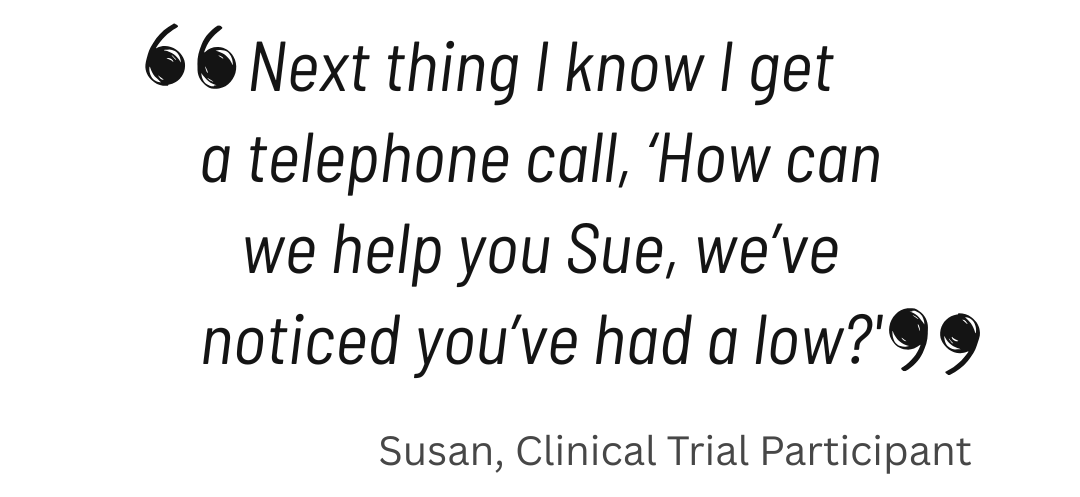
“One time I had a low (hypoglycaemic episode) and we were travelling in the caravan,” she said. “Next thing I know I get a telephone call, ‘How can we help you Sue, we’ve noticed you’ve had a low?'”
REMODel (Rethinking Model of Outpatient Diabetes Care Using eHealth) was developed by Dr Anish Menon, an early career researcher at the University of Queensland and endocrinologist at Princess Alexandra Hospital in Brisbane, with support from ACADI. REMODel uses a Bluetooth glucose meter and a clinician dashboard app to allow patients to efficiently record and upload their blood glucose readings.
‘Smart alerts’ identify patients who may require advanced support. It is a nurse-led service and is proving to be extremely cost effective. This benefits both patients and the Queensland health system.
With nurses providing support in real time, REMODel has freed up endocrinologists so they are dealing with complex cases rather than undertaking traditional standard patient check-ups three or four times a year.
Anish believes a reduction in the number of HbA1c blood tests required to manage type 2 diabetes will lead to sustained and improved self-management by patients. “It’s saving money and reducing complications with patients better managing their readings and receiving the support they need, when they need it and where they need it.”
Trevor, FlashGM clinical trial participant
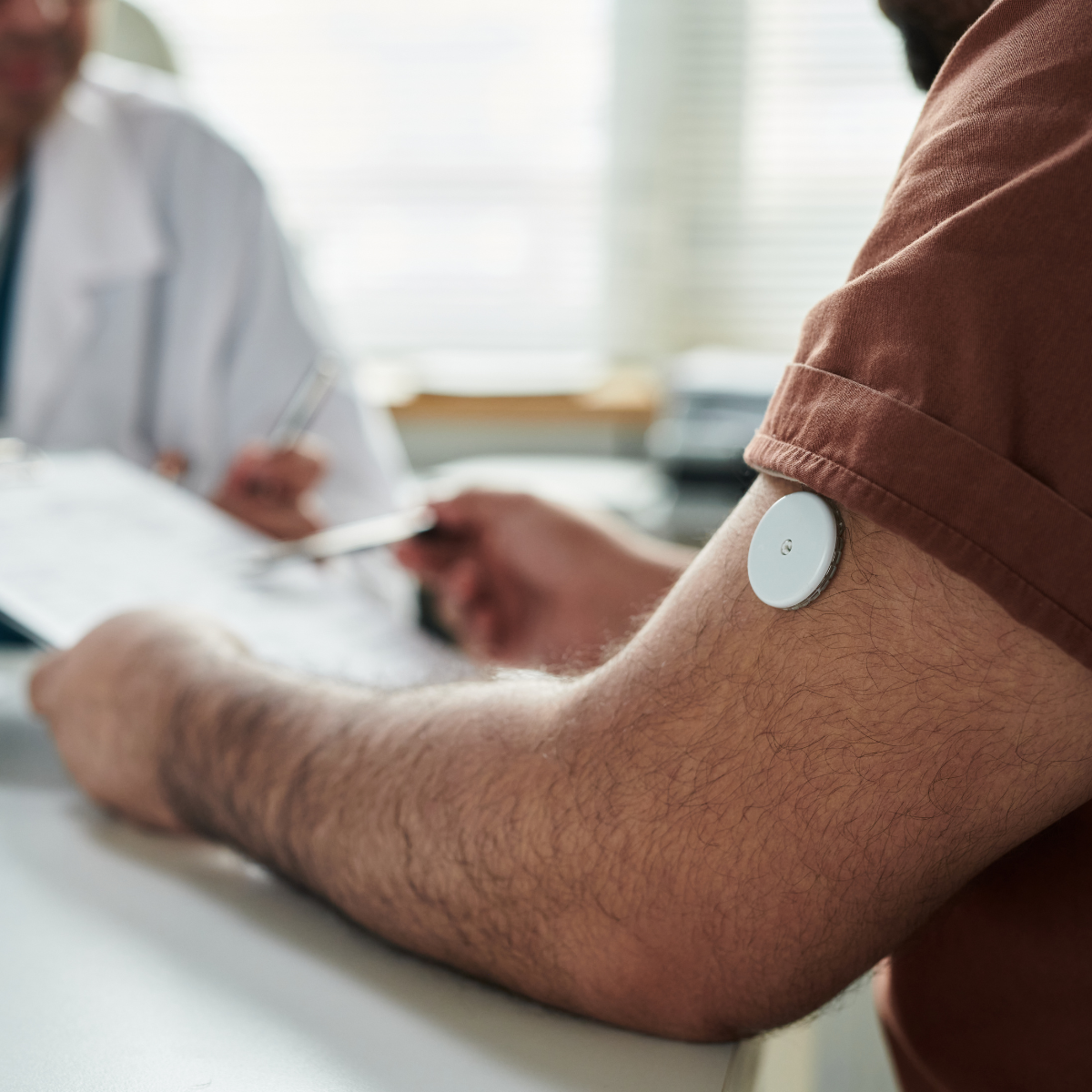
Aboriginal community leader Trevor, a proud Kamilaroi man based in Victoria, was an early participant in the ACADI-supported FlashGM Study. A national randomised clinical trial, FlashGM investigates whether continuous glucose monitoring technology can improve diabetes management for Indigenous Australians living with type 2 diabetes, compared to traditional finger-prick testing.
After joining the study, Trevor experienced positive improvements in his diabetes management using the continuous glucose monitor linked to his mobile phone.
“I don’t need so many meds now and it overcomes the tedious finger pricking where your fingers eventually go numb,” Trevor says. “I simply look up the app during the day and an alarm sounds if I’m under or over.”
Having access to immediate glucose data has helped Trevor better understand how his everyday choices affect his glucose levels.
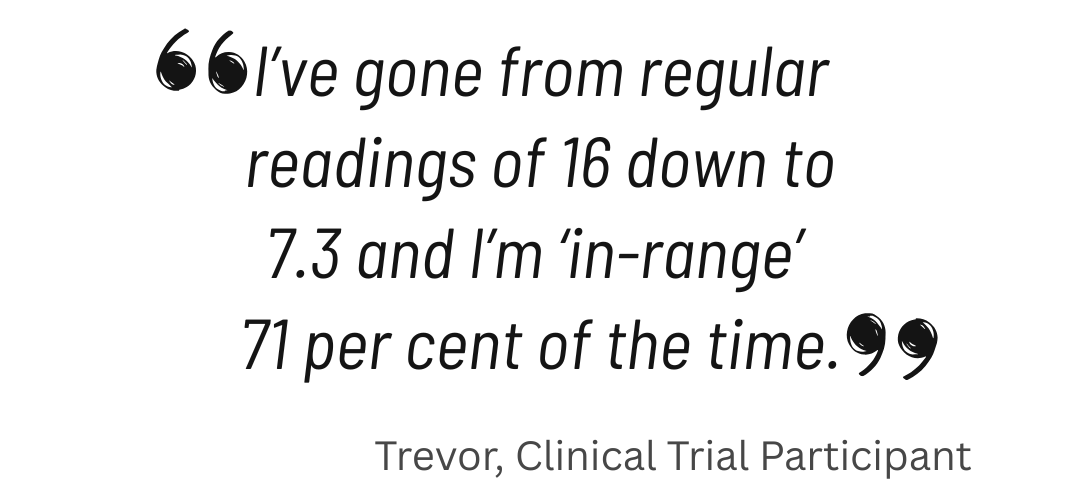
“My sugars are going down and I can see the direct result of different foods I’ve eaten, and exercise. I’ve gone from regular readings of 16 down to 7.3 and I’m ‘in-range’ 71 per cent of the time.
“I’ve changed my diet, I go to the gym five days a week and I know I couldn’t have done that before. I used to get home from work exhausted, eat takeaway and go to bed. Then repeat. Now, I can see the influence of my efforts immediately and feel motivated.”
Experiencing these positive results firsthand, Trevor is a strong advocate for the study. He encourages Aboriginal and Torres Strait Islander colleagues and community members to participate and help raise awareness of the important role clinical research can play in improving health outcomes for Aboriginal and Torres Strait Islander communities.