From Discovery to Impact
One of ACADI’s core objectives is to ensure that promising research discoveries are translated into practical solutions that improve the lives of people affected by diabetes.
Since its establishment in 2022, ACADI has played a pivotal role in advancing diabetes-focused research and discovery towards real-world implementation and commercialisation.
Across our portfolio of fully funded, seed-funded and supported projects, a number of innovations have already reached commercial realisation, while others continue to progress along the translation pathway.
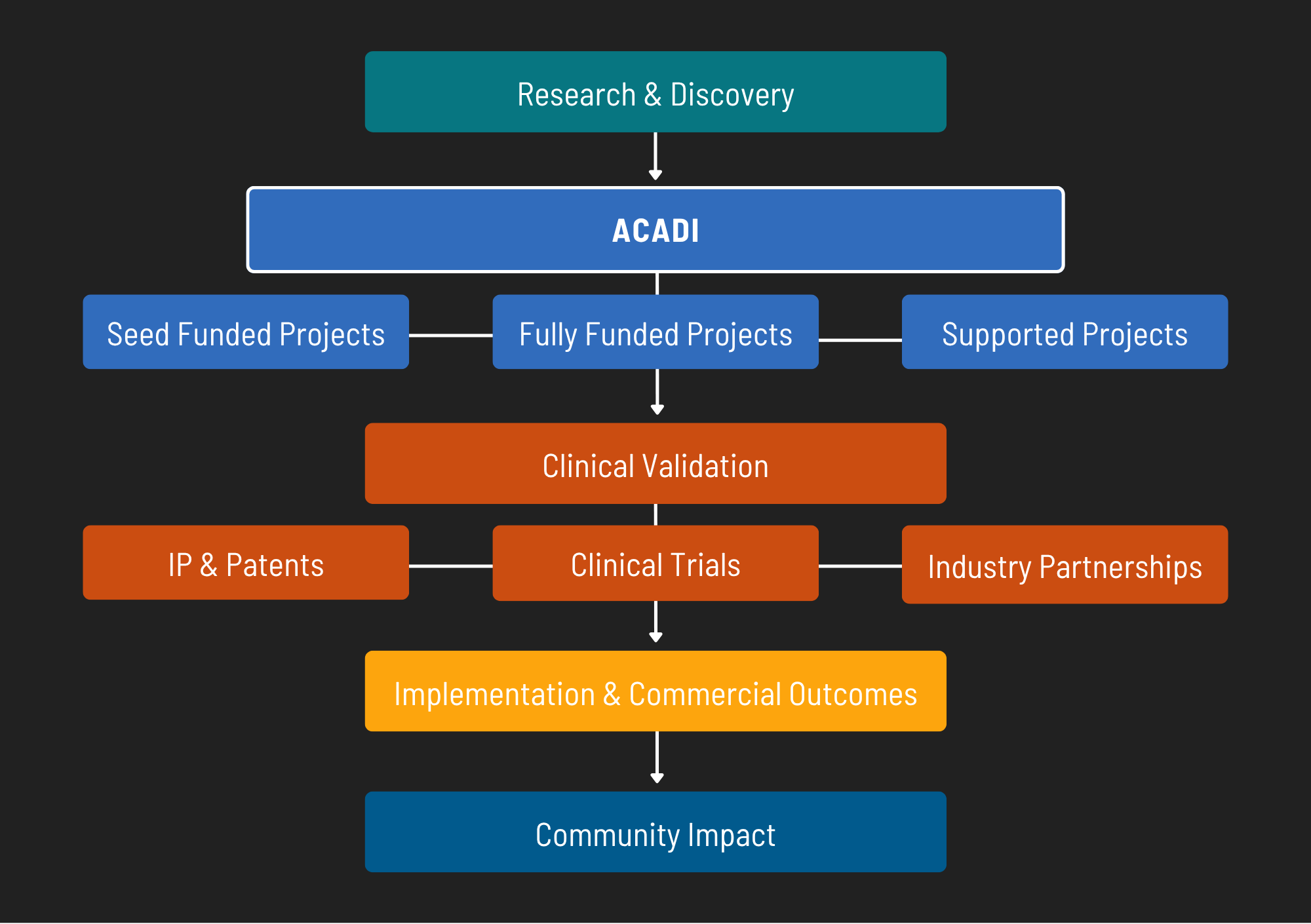
These projects include technologies and programs with strong research outcomes, patents in development, clinical trials nearing completion, industry partnerships being established, and solutions preparing for implementation in healthcare and community settings.
By bringing together researchers, healthcare providers, industry partners and people living with diabetes, ACADI is helping to accelerate the journey from discovery to impact, delivering tangible benefits for Australians living with, or at risk of, diabetes.
Advancing Innovation
Several projects within the ACADI portfolio are progressing towards commercialisation, with promising research being transformed into practical solutions for diabetes prevention, management and care.
Some have already reached commercial realisation, while others are undergoing clinical validation, developing intellectual property, or are partnering with industry.
The examples below highlight new technologies, therapies, tests and programs that are already commercially available or showing great promise of broader adoption and real-world use.
A free telehealth service in Victoria for people with non-life-threatening complications, providing immediate emergency diabetes management support. Over 870 diabetes-related emergencies were managed in the first 6 months of operation.