
Australia’s Diabetes Crisis
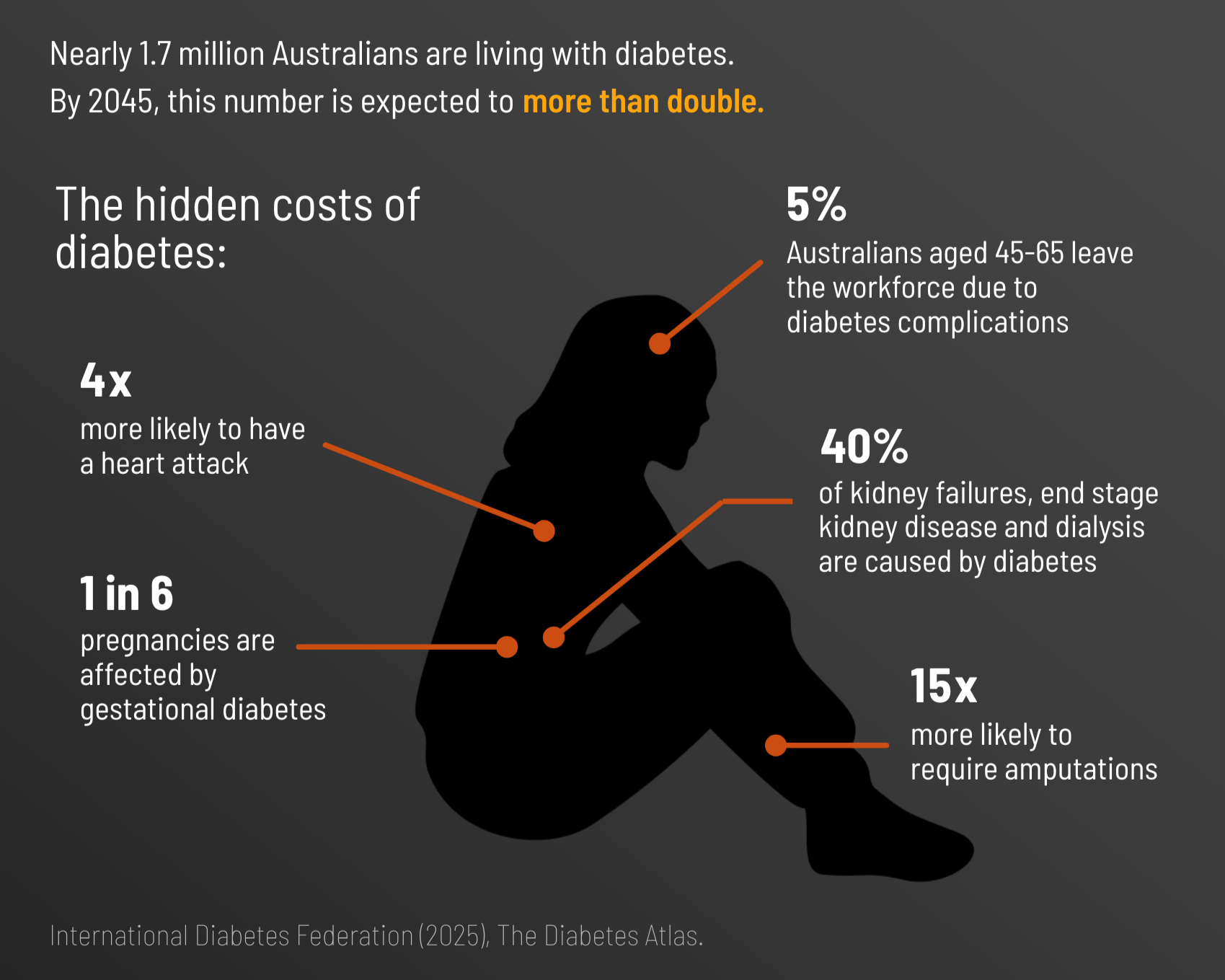
Diabetes is one of Australia’s most formidable health challenges. According to the International Diabetes Federation (2025) close to 1.7 million, or 1 in 11, Australian adults is living with diabetes, with the Australian Bureau of Statistics (2025) predicting that an additional 2.7% of the Australian population is at high risk of developing the disease.
Diabetes disproportionately impacts the most vulnerable, including Aboriginal and Torres Strait Islander people, rural and remote communities and those from low socioeconomic backgrounds.
Beyond its direct health impacts, diabetes increases the risk of other chronic diseases such as cardiovascular disease and stroke. In addition, the economic impact of diabetes is staggering: costing the Australian economy around $17.6 billion each year (IDF Diabetes Atlas, 2025).
Foundational Impact
ACADI was established to address inequities in diabetes-related healthcare and ensure that all Australians—regardless of where they live or their cultural background—have access to new treatments, emerging technologies and opportunities to participate in clinical research.
During the Centre’s establishment phase (2022–2025), significant progress was made towards improving access to care and accelerating innovation in the prevention, diagnosis and treatment of diabetes and its complications.
These achievements have strengthened Australia’s diabetes research ecosystem and created a strong foundation for continued advances in diabetes care and improved outcomes for people affected by diabetes.
ACADI’s unique national collaboration model brings together researchers, clinicians, industry partners, policymakers and communities to support the development and translation of new, evidence-based approaches to diabetes prevention, diagnosis and care.
Our Impact at a Glance
Our Impact in Detail

Health Benefits
- Supported greater access to diabetes services, innovative treatment options and person-centred models of care is helping Australians receive the right care at the right time.
- Enhanced healthcare delivery and patient experience through new approaches to diabetes prevention, diagnosis and management are supported by a skilled and well-equipped clinical workforce.
- Reduced diabetes-related complications, disability and treatment burden through earlier intervention, improved disease management and access to emerging innovations.
Economic Benefits
- Reduced pressure on the healthcare system through the prevention of costly diabetes-related complications and avoidable hospital presentations.
- Workforce participation and productivity is increased by supporting people to better manage their diabetes and maintain their health and wellbeing.
- Economic value has been generated through research investment and job creation, accelerated translation and commercialisation of innovations, and the strengthening of Australia’s diabetes innovation ecosystem.

Access to Care
- Person-centred outcomes are embedded in all ACADI-supported research and implementation of diabetes care and treatment innovations.
- New technologies, treatments and approaches to diabetes prevention, diagnosis and management are becoming more accessible, alongside greater opportunities to participate in clinical research.
Equity and Reach
- Diabetes research, clinical trials and cutting-edge models of care have expanded beyond metropolitan areas, to better support people in rural, regional and remote communities.
- The ACADI-supported Victorian Virtual Emergency Department Diabetes Service (VVED) has helped more than 850 people access specialist diabetes care in its first six months, achieving an 84% diversion rate from hospital presentations and patient satisfaction ratings of up to 94%.
 ACADI has expanded access to diabetes clinical trials in Australia by strengthening the quality and coordination of clinical research, increasing participation among priority populations, and enabling more people to contribute to research that shapes the future of diabetes care.
Strengthening Clinical Research
- Diabetes researchers are supported to design, conduct and deliver high-quality trials that help translate research into practical results for those living with diabetes.
- People living with, or at risk of, diabetes have greater opportunity to participate in clinical research and trial the potential benefits of emerging therapies and technologies.
- Established the Australian Diabetes Clinical Trials Network (ADCTN) with Diabetes Australia in 2024, reviewing 10 clinical trial protocols within its first 18 months, to improve the quality of clinical trials in Australia and advance more research towards real-world implementation.
Reaching Priority Populations
- More than 525 participants have enrolled in ACADI-supported clinical trials, including over 200 people from priority and at-risk populations.
- Meaningful engagement with community-based health services has resulted in more than 235 people from rural, regional and remote communities participating in clinical trials.
 ACADI is helping ensure the benefits of diabetes research and innovation are shared equitably by embedding lived experience, cultural considerations and specialist expertise into research, clinical care and innovation activities.
Community-Led Innovation
- Community and Indigenous Advisory Groups help shape research priorities, strategy and innovation activities, ensuring projects are informed by lived experience and community needs.
- Researchers and clinicians are connected with community leaders and people living with diabetes to better support relevant, practical and inclusive approaches to diabetes research and care.
Prioritising Equity
- Culturally appropriate research and innovation initiatives are supported, including Australia’s first multi-site clinical trial for Aboriginal and Torres Strait Islander people with type 2 diabetes, FlashGM.
- Diabetes research participation among rural, remote and priority populations is increasing, helping ensure the benefits of new innovations in diabetes care and technology are widely available.
System Impact and Advocacy
- Six specialist platforms—Behavioural Science, Biostatistics, Co-Design, Epidemiology, Health Economics, and Implementation Science—support researchers and research outcomes by embedding practical value, community benefit and equitable outcomes from the earliest stages of project development.
- Informed diabetes policy discussions and advocacy efforts through thought leadership and contributions to initiatives including the Parliamentary Inquiry into Diabetes (2024).
 Through its National Training Program, ACADI addresses the outbound flow of talent and future-proofing Australia’s diabetes workforce by providing education, mentoring, funding and career development opportunities that strengthen capability across research, healthcare and innovation.
Ongoing Education and Professional Development
- Diabetes researchers, clinicians and allied health professionals are developing new knowledge and skills through national training initiatives, including seminars, workshops and specialised education programs.
- More than 2,800 diabetes stakeholders have accessed professional development, mentoring and funding opportunities to support the future of diabetes research and care.
Supporting Career Development
- Career pathways are strengthened through PhD scholarships, Early Career Researcher Fellowships, mentoring opportunities and innovation-focused programs that support emerging talent.
- More than 95 jobs, scholarships and career development awards have been created to help attract, develop and retain Australia’s future diabetes workforce.
 Through targeted investment in diabetes research, ACADI is accelerating the development, translation and adoption of innovative approaches to diabetes prevention, diagnosis, management, models of care and treatment.
Research Advancement and Translation
- An active pipeline of 18 research projects is addressing critical gaps in diabetes prevention, diagnosis, management, models of care and therapies, with a strong focus on equitable access to innovation.
- 40% of ACADI projects have reached Technology Readiness Level (TRL) 4 or higher, progressing research discoveries towards real-world implementation through clinical trials, technology development and commercialisation activities.
- Two ACADI-supported innovations have entered the market and are pursuing further market expansion to increase their impact and reach.
Building Australia’s Innovation Ecosystem
- Researchers are supported through specialist platforms, research infrastructure and coordinated national networks that strengthen collaboration and accelerate innovation.
- Economic impact is enhanced through patent development, licensing strategies, spin-out companies and health economic modelling that supports evidence-based policy and investment decisions.