Despite Australia being a wealthy nation with a highly developed healthcare system, diabetes continues to disproportionately impact Aboriginal and Torres Strait Islander peoples and other vulnerable communities.
Geography, language, cultural factors and socio-economic disadvantage contribute to unequal access to healthcare services. This in turn affects the prevention, diagnosis and ongoing management of diabetes, particularly for people living in rural and remote areas.
Our Commitment
ACADI is committed to closing the gap in diabetes-related health equity by transforming models of care and improving access to the latest innovations in prevention, treatment and technology.
Through collaboration across research, healthcare, industry and community sectors, our network strives to ensure that innovation translates into real-world benefits for all Australians.
Healthcare Impact on Australia’s Indigenous Communities
Key Challenges
- Around one in six Aboriginal and Torres Strait Islander adults are living with diabetes, most commonly type 2 diabetes. (Australian Bureau of Statistics, 2024)
- Hospitalisation rates for diabetes-related conditions are four times higher for Aboriginal and Torres Strait Islander peoples than for non-Indigenous Australians. (Australian Institute of Health and Welfare, 2024)
- Cultural safety, language diversity and socio-economic disadvantage are recognised barriers to accessing effective healthcare services, specialist support and diabetes technologies.
- For many people living in rural and remote Australia, the tyranny of distance remains a significant barrier in accessing basic medical care.
To address these challenges, ACADI supports and delivers research programs dedicated to improving access to diabetes care and advancing health equity across Australia’s Indigenous population.
By developing and evaluating culturally safe, community-led approaches to care, our research is generating evidence that can improve diabetes prevention, treatment and support for other underserved populations across the country.
As a trusted partner, ACADI works with Aboriginal and Torres Strait Islander communities to co-design culturally safe, sustainable and community-led approaches to care. Together, we are helping to close gaps in health outcomes, prevent avoidable complications and create a future where every person has the opportunity to benefit from advances in diabetes care, regardless of where they live.
Diabetes in Northern Australia
30% of the population in the Northern Territory identify as Aboriginal and Torres Strait Islander people, 77% of whom live in remote areas. Access to these locations is difficult, particularly during the wet season when roads are cut off and many communities become accessible only by boat or air.
The Northern Territory is linguistically diverse, with more than 100 Indigenous languages and dialects spoken across the region. English is often the second, third, fourth, fifth or sixth language, so public health campaigns need to be flexible when communicating about diabetes with individuals and their families.
Connection to Country, cultural knowledge and practice are vital to the wellbeing of Aboriginal and Torres Strait Islander people.
Culturally appropriate communication is essential to overcoming the stigma and shame about diabetes, and to supporting those living with, or at risk of, the condition to seek support from local healthcare providers.
Supporting Indigenous Health-Focused Research
A growing portfolio of Indigenous-focused research projects demonstrates ACADI’s commitment to reducing diabetes-related health inequities.
In partnership with Aboriginal and Torres Strait Islander communities and healthcare providers, our researchers are translating new knowledge into practical solutions that improve diabetes care and health equity.
These ACADI-supported projects demonstrate how culturally safe, community-led approaches can help overcome barriers to care and deliver meaningful benefits for Indigenous Australians living with or at risk of diabetes.
The FlashGM Study investigated whether continuous glucose monitoring could improve diabetes management for Aboriginal and Torres Strait Islander people living with type 2 diabetes. Conducted across multiple sites throughout Australia, the study compared flash glucose monitoring with traditional finger-prick blood glucose testing over a six-month period.
With 350 participants recruited nationally, the findings are expected to inform more effective and equitable access to diabetes technologies, improve health service delivery and support better diabetes outcomes for Aboriginal and Torres Strait Islander peoples and other high-risk populations.
Bernard and the FlashGM study
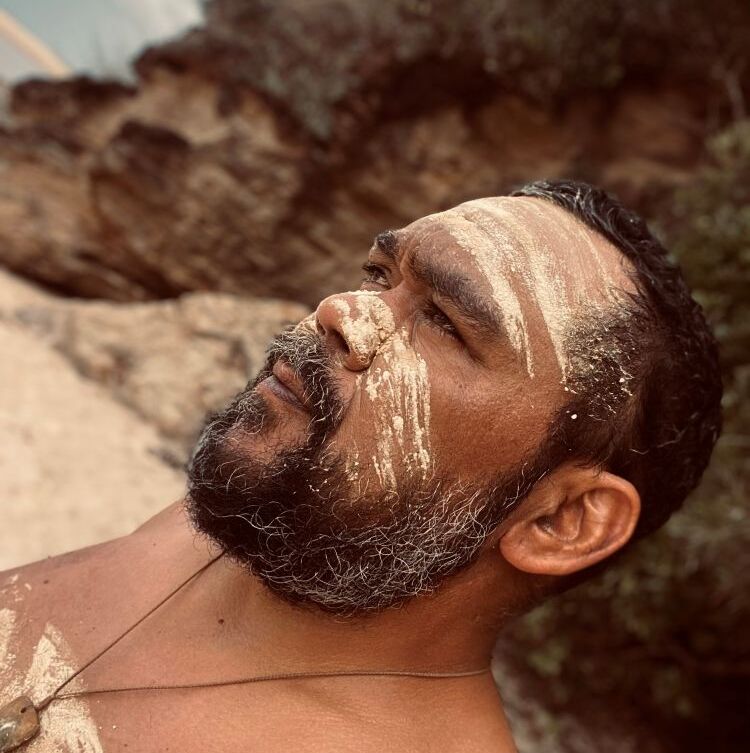
Bernard, a proud member of the Gumbaynggirr, Bundjalung and Dhunghutti Nations, has turned his life around after a decade of health struggles and neglecting his type 2 diabetes. The turning point came when an Indigenous doctor took the time to listen, connect and meet his needs. “I can be my authentic self with a doctor who knows how to listen,” Bernard says.
A need to retain his driver’s licence was the ultimate motivator to take control of his diabetes. Bernard has lost more than 20 kilograms by walking 4.5 kilometres each day, learned to cook healthy food, and now enjoys being an active and energetic father to his daughter. “I didn’t want my daughter to grow up without a dad.”
His hard work has paid off. Bernard has retained his driver’s licence for another two years, proving he is safe to be behind the wheel.
Bernard had worked with members of the ACADI research team for some time before being invited in 2024 to contribute to diabetes community engagement activities for Indigenous and non-Indigenous communities.
“My journey with type 2 diabetes had been pretty impacting until I was asked to work on this project. It was a real kick up the backside. This diabetes isn’t just about me. It’s about helping my mob, nationally.”
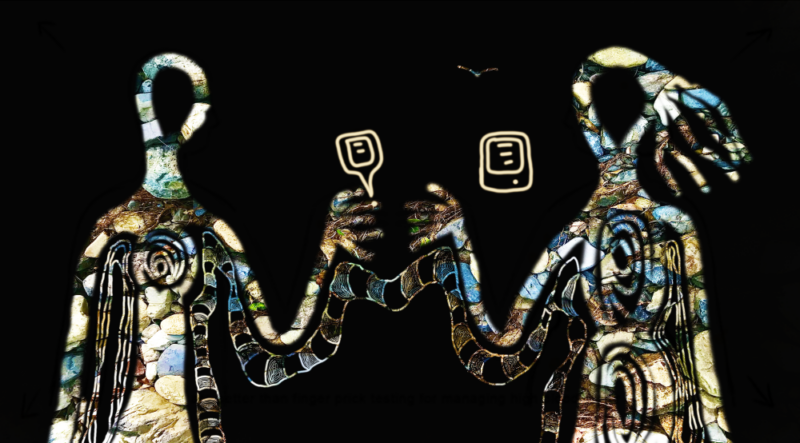
Bernard is the multimedia artist behind ACADI’s FlashGM video, used by doctors to support informed discussions with Aboriginal and Torres Strait Islander people considering participation in the study.
The program aimed to replace finger-prick blood glucose testing with continuous glucose monitoring. By wearing a monitor that measures glucose levels continuously, participants could better understand how food and other factors affected their blood glucose levels in real time. In total, 350 Aboriginal and Torres Strait Islander people were recruited across multiple trial sites throughout Australia.
With the study now complete, the research team is analysing the data. Findings from the FlashGM study are expected to lead to major, cost-effective health gains and significantly improved health-service delivery for Indigenous and other high-risk Australians.
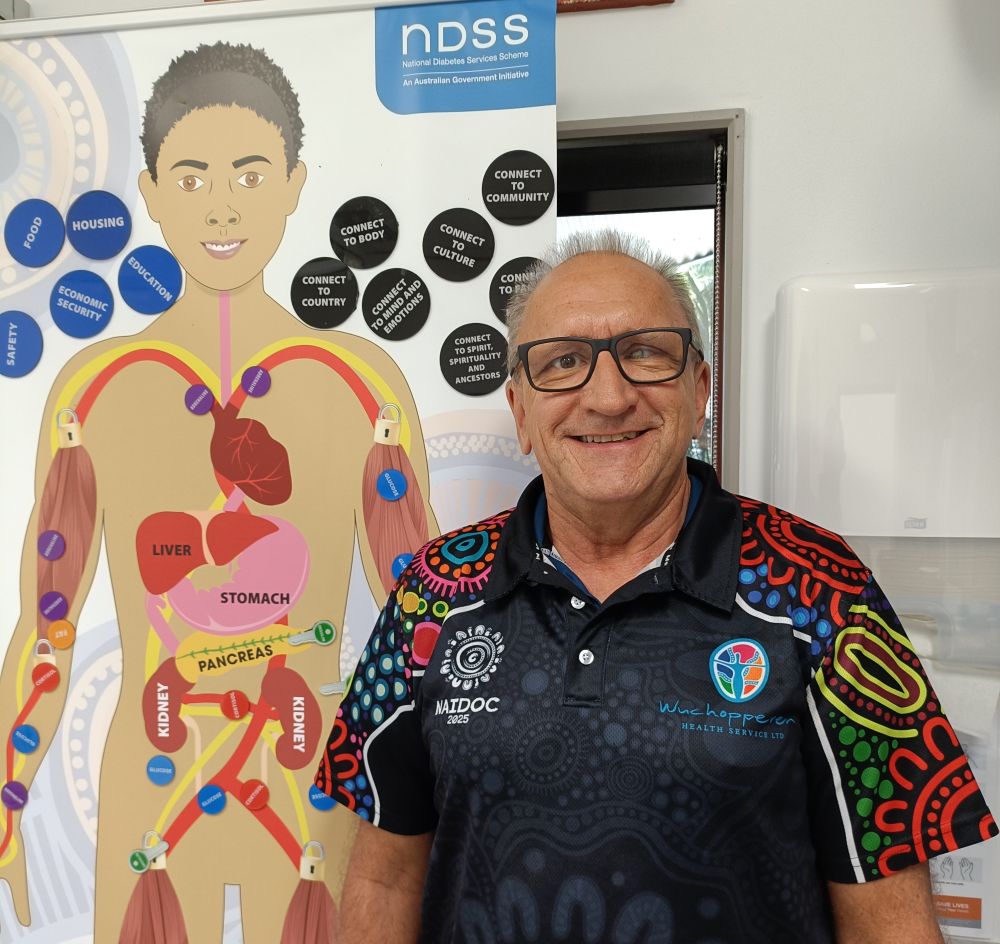
Bernard continues to support ACADI and the FlashGM study team as a cultural advisor, ensuring communications acknowledge culturally sensitive approaches to community and Country. He is passionate about helping younger generations understand the importance of caring for their health before they are diagnosed with diabetes, “We need to encourage oral storytelling through the FlashGM study; we need to listen to our Elders and ask them how they have found life with diabetes.”